
Expressions
AE 360 - Expression: For All Hell To Break Loose

AE 360 – Expression: For All Hell To Break Loose
Black Text = Lesson vocab Blue Text = Idioms Green Text = Lesson expression Red Text = Aussie Slang
Welcome to today's Expression Episode, guys. Today's expression is going to be "for all hell to break loose". I hope you guys have been having an awesome week. I'm healing up. I'm coming good. I was sick for the last week. (I) had a bit of a head cold, had the sniffles, I've been blowing my nose a lot, (I've had a) bit of a sore throat, but I'm getting better. I hope you guys are going well.Announcements:
A few announcements, a few housekeeping things first. So, I'm still collecting postcards, if you guys want to send your postcards. I will make sure that the address is sent below, but wherever you are in the world, if you feel like sending me a postcard... oh, I can just tell you can send it to P.O. Box 597, Ocean Grove, 3226, Victoria, Australia. I'll make sure it's in the transcript for this episode. But yeah, I would love to get some postcards and fill this wall up behind me. Apart from that, obviously, (I've been) working away at the Effortless Phrasal Verb course. (I've been) really enjoying that guys. Everyone seems to be loving it. If you haven't checked it out, make sure you watch those videos. They're all on YouTube. And if you're interested, you can enroll in the course. And also, I'm thinking about redesigning The Aussie English Classroom. OK? So, I think I might just chat to you a little bit quickly about it. There'll be three packages for The Aussie English Classroom. (Package 1) I'm going to redo the expression episode ones where it's all online. I'm looking for my phone, but my phone is in front of me here. And you can do all the exercises and read everything off your phone instead of downloading files. So, I want to make that more streamlined. I want to make it easier to use. I think I want to make a few more additions to the exercises as well. So, you would have a one exercise every day. So, like, 1. vocab to work on your vocab, 2. listening comprehension, 3. phrasal verbs substitution exercises, 4. Aussie slang, and then I want to do 5. pronunciation of vowels and consonants and the way that we change words when we speak, and then I want to also do 6. connected speech, rhythm, and intonation, and then 7. grammar as well. So, that would be Package 1 where you would get all that. Package 2 would be that you get access to a private group with other students, and you would get weekly life lessons like this that are just few guys. Where you can ask me anything. I can help you. We can go over topics. You'd get weekly tasks for like IELTs. Writing tasks. We could have movies that we watch, books that we're reading together. And yeah, we would all work together in this group. And then Package 3 would be that you would have several hours a month of private lessons with me as well as the group and everything else. So, that's what I'm thinking about for The Aussie English Classroom, and where that's going in the next year or so. So, if you have any feedback, let me know. We can chat about that later.Expression:
Let's get into today's episode, guys. So, we're going to go over the expression "for all hell to break loose", "for all hell to break loose". This was voted in by Duaa, or voted in by everyone*. Duaa was the one who suggested this in The Aussie English Virtual Classroom Facebook group. Everyone voted on it. This one got to the top. And, so good job Duaa on picking this expression.Joke:
We'll start today with a joke as always, guys. And the joke is, "Why did the wombat cross the road?". "Why did the wombat cross the road?". To see his flat mate. To see his flat mate. You get that? So, a "flat mate" is someone who lives with you in a flat or an apartment. But, it's a play on words here, because wombats often get hit by cars, and if they get hit by cars on the road, they get made "flat". And so, it's a joke about him crossing the road to see his mate who's been made flat by being hit by a car. "Why did the wombat cross the road? To see his flat mate". (It's a) bit on the nose. Alright.Definitions:
So, today's expression is going to be "for all hell to break loose", guys. As usual, we'll go through the different words in this expression. So, I'm sure you know what "for" is and the word "to”. "All". "All" can be used to mean everything, the entire thing, the whole thing. So, the entire quantity or extent of a particular group or thing. So, I have all of my fingers, every single one of them. I have all of my fingers. Maybe if I had my entire family here, all of my family is here. The word "hell". "Hell", is a place regarded by various religions as the spiritual realm of evil and suffering. So, Heaven or Paradise tends to be the really nice afterlife. Hell is the really horrible one with Satan and death and brimstone and fire. So, that's "hell”. "To break". If you break something, it's that you separate it into multiple pieces, usually, in a destructive manner. So, you're destroying the thing by breaking it. So, keep separation in mind here, though. So, to break something. I might break my arm. If I fall on my arm and my arm snaps, it breaks. I might drop a glass, and the glass breaks on the ground as it separates into little pieces. But keeps "separation" in mind for when we get to "to break loose”. "Loose". If something is “loose”, it can be that it is not firmly tightened. So, if I had some pants that I bought and they didn't fit me very well, they kept falling down, I could say they're pretty loose. They're not fitting tightly. They're not fitting firmly. So, these pants feel really loose. But it can also be if something is set free or something is free. If it's released. If it's unrestrained. So, if I open the cage and the bird flies out of the cage, it's been set loose. It is loose. It's free. It's released. But "to break loose", is combining those two ideas of getting free, but doing so in a destructive manner. So, you are suddenly getting free. You're escaping. You're releasing or you're being released from something. So, you're getting separated from, say, your cage. You're breaking out of your cage to get loose. You're breaking loose out of the cage. Or maybe you're breaking away from your captor, someone who's caught you. You're breaking away. You're breaking loose. So, those are the words. Let's define the expression guys. So, "for all hell breaks loose", though. This is where obviously this time it's "hell" that is the thing that's "breaking loose" and going crazy, getting out there. "For all hell to break loose", it's said when something chaotic or disruptive occurs. So, it's a chaotic or disruptive situation, especially one that begins all of a sudden. It begins suddenly. It begins unexpectedly.Expression Origin:
So, I looked up the origin of the expression, "for all hell to break loose", and it's actually quite older than I thought. It dates back to the 1660s. So, the year 1667 from a book by John Milton called Paradise Lost. And here's a chance for you guys to listen to some middle English. So, this is English that I don't understand, that is back from the Middle Ages, and before that there was Old English. So, we have Old English that was like, I think, over a thousand years ago, Middle English, and then more modern English from like the 1700s on. But here's the line that uses this expression in Middle English, "Wherefore with thee came not all hell broke loose?". "Wherefore with thee came not all hell broke loose?". If I read that, I have no idea what it means. When it's translated though, it means, "Why didn't all hell break loose and come with you?". "Why didn't all hell break loose and come with you?". "Wherefore with thee came not all hell broke loose?". So, yeah, (to) give you a bit of an insight as to whether or not English speakers today can understand English from 500 years ago.Examples:
So, let's go through some examples, as usual guys, of how to use this expression.1.
So, imagine the first one. You are dancing at a party and an amazing song that you guys love comes on. Someone starts playing this song. And the song is Men At Work - Down Under (watch the music video here). So, Men At Work is a famous Australian band, and the song Down Under is a really famous song. I definitely recommend you guys look it up. So, this comes on, and all the Aussies in the room go nuts. They go ballistic. They go berserk, (they go) bananas, they go crazy, and all hell breaks loose. So, all of a sudden, everyone starts going nuts. All hell breaks loose.2.
Example number two. Imagine that Colin Hay, who is the lead singer from the band Men At Work. He's the one who sings down under. Imagine he walks into a pub where a bunch of Aussies who are fans of Men At Work are having a drink after work. So, maybe they're having a jug of beer. They're sharing it. Maybe they're having a few pots, a few pints, or a few schooners. But they're sinking some piss at the pub after a hard day's work. After doing some hard yakka at work. There's a bunch of slang in there that we'll go over today. And they see Colin Hay walk into the pub. So, they see him walk in and they go ballistic. They go berserk. All hell breaks loose. They go bananas. They go crazy. "Wahhh! It's Colin Hay! Oh my God!!!". All hell breaks loose.3.
The third one is, imagine that after everything's died back down in the pub. So, everything's calm down, everything's quietened down, after Collins left everything's calmed down, it's died down, a man enters to try to rob the pub. So, he's trying to hold the pub up with a gun. He pulls a gun out and he says to the barman, "Open the till. Give me the cash. I want the money, and then I'll get out of here. But if you don't give it to me, everyone's going to get hurt.". The moment he pulls the gun out, if the crowd goes crazy, everyone starts running around and screaming, all hell breaks loose. So, the moment the gunman brandishes the gun, he pulls the gun out, and says, "Give me the money!", all hell breaks loose, because suddenly, everything goes crazy. Pulling the gun out was unexpected. Everyone goes berserk. Everyone goes bananas. All hell breaks loose. So that's it. The expression "for all hell to break loose" is said of a chaotic or disruptive situation, especially, one that happens all of a sudden, it happens suddenly, it happens unexpectedly. You didn't expect it. As usual, let's go over a listen and repeat exercise, guys. This is a chance for you to practice your pronunciation. I'm going to say the phrase, "All of a sudden, all hell broke loose". I want you to pay attention to how I am contracting words in this sentence, and how my intonation and the connected speech is working. OK? So, practice it a few times, listen and repeat after me, and try and say just as I say it, guys. OK? I'm going to say, "all of a sudden" five times, I'm going to say, "all hell broke loose" five times, and then, I'll say the whole thing five times. Let's go.Listen & Repeat:
All of a sudden. x 5
All hell broke loose. x 5
All of a sudden, all hell broke loose. x 5
Good job guys. Good job. You nailed it. Alright. Time for some Aussie facts, and then we'll finish up.Aussie Fact:
So, today's Aussie fact, interesting fact about Australia, is the fact that there are more kangaroos in Australia than there are humans. How crazy's that? So, the numbers can fluctuate from year to year, but at the moment, this year, there's estimated to be about 25 million kangaroos in Australia. 25 million kangaroos. To put that in the context of humans, there's 24.13 million humans in Australia. So, we're about 1 million short of the number of kangaroos. And to put in the context of things like cattle, so cows, bulls, there are 26.6 million cattle in Australia. And when we measure cattle, we say "head of cattle". 26.6 million head of cattle in Australia. But the interesting thing that I found out when I was looking this fact up is that only a handful of animals in Australia actually get counted. They get an annual census. Humans are one of the animals. Cattle are obviously another one. But kangaroos, obviously too, get counted every single year to work out what their numbers are doing. So, how crazy is that, guys? Anyway, remember, guys, if you want to get all the bonus content for this episode, sign up to be a member in The Aussie English Classroom. You can enroll now. You can sign up to get it for one month for just a dollar. Try it. See how it goes. It's going to upgrade your English. It's going to take it to the next level. If you go through it, do all the exercises, and work hard. I know you're going to love it. Aside from that, make sure that you jump on YouTube, jump on Facebook, send me a message and say, "G'day", guys. And I hope you have a great week. I will chat you soon. Peace out.Additional Exercises:
SW = Somewhere ST = Something SO = Someone
Exercise 1: Vocab & Writing Practice
Download PDF and print it to complete this exercise:- Find the sentence that includes the word or phrase in the text and write it out.
- Write your own sentence using that word or phrase.
Exercise 2: Listening Comprehension
• Listen to the episode again now and answer these questions in your own words. 1. What’s today’s expression? ______________________________________________ 2. Was I well or sick for the past week? ______________________________________________ 3. List 1 or more announcements I make ______________________________________________ 4. What’s the address I give? ______________________________________________ 5. Where do I say the Effortless Phrasal Verb videos are that you can check out? ______________________________________________ 6. How many packages do I plan on making in the redesigned AE Classroom? ______________________________________________ 7. How many exercises do I want to create for you? ______________________________________________ 8. What would be in package 2? ______________________________________________ 9. What’s in package 3? ______________________________________________ 10. Who suggested this expression? ______________________________________________ 11. Where did she suggest this expression? ______________________________________________ 12. What’s today’s joke? ______________________________________________ 13. What’s a “flat mate” ______________________________________________ 14. Define: all ______________________________________________ 15. Define: hell ______________________________________________ 16. Define: to break ______________________________________________ 17. Define: loose ______________________________________________ 18. What animal do I say flies out of the cage? ______________________________________________ 19. Define: to break loose ______________________________________________ 20. Fill in the blank - “Maybe you’re breaking away from your ______.” ______________________________________________ 21. Define: for all hell to break loose ______________________________________________ 22. When does this expression date back to? ______________________________________________ 23. What book does it come from? ______________________________________________ 24. How long ago was Old English? ______________________________________________ 25. From when does Modern English date back to? ______________________________________________ 26. What is the line in Middle English? ______________________________________________ 27. What does the line mean when translated from Middle to Modern English? ______________________________________________ 28. Can English speakers today understand English speakers from 500 years ago? ______________________________________________ 29. Briefly describe example 1. ______________________________________________ ______________________________________________ ______________________________________________ 30. Briefly describe example 2. ______________________________________________ ______________________________________________ ______________________________________________ 31. Briefly describe example 3. ______________________________________________ ______________________________________________ ______________________________________________ 32. What’s today’s interesting Aussie fact? ______________________________________________ 33. How many kangaroos are there estimated to be in Australia? ______________________________________________ 34. How many people are there in Australia? ______________________________________________ 35. What word do we use for measuring number of cattle? ______________________________________________ 36. How many cattle are there estimated to be in Australia? ______________________________________________ All answers below in the Answers section.Exercise 3: Phrasal Verb Substitution
• In this exercise, we’re going to practice using the phrasal verb “to break out (of SW)” which means:o To escape (from SW) o To get free (from SW) o To break loose (from SW) o To get out (of SW)
• Substitute in the phrasal verb “to break out (of SW)” into the following sentences. • Pay attention to match the verb tense used in each sentence too. Let’s go: 1. She escaped from the room. ______________________________________________ 2. I had wanted to escape from here. ______________________________________________ 3. You would’ve gotten free eventually. ______________________________________________ 4. We got free from the jail cell. ______________________________________________ 5. She won’t have gotten out by then. ______________________________________________ 6. I’m going to escape. ______________________________________________ 7. We’ll break loose, don’t worry. ______________________________________________ 8. You’ll find a way to get out. ______________________________________________ 9. They broke loose from their cage. ______________________________________________ 10. He got out of the garage. ______________________________________________ 11. She’s going to get free. ______________________________________________ 12. They will have broken loose by tomorrow. ______________________________________________ All answers below in the Answers section.Exercise 4: Slang
- This week’s slang mission is to look up and use the following slang terms.
Exercise 5: Pronunciation Exercise
• In this exercise, we’re going to practice the vowel sound /iː/Bee - /biː/ Sea - /siː/ Bleak - /bliːk/ Meek - /miːk/ Steep - /stiːp/ Leap - /liːp/ League - /liːg/ Seize - /siːz/ Lease - /liːs/ Geese - /giːs/ Week/weak - /wiːk/ Reed/read - /riːd/
Exercise 6: Connected Speech
• In this exercise, we’re going to practice connected speech and focus on the pronunciation of the weak form of “to”. • Weak forms of words are when the syllable sounds are unstressed in connected speech and are often pronounced as a schwa /ə/. • The strong form of “to”, when the syllable is stressed, sounds like this: /tuː/ • The weak form of “to”, when the syllable is unstressed, sounds like this: /tə/ • Substitute in the weak form for the strong form of “to”:/tuː/ - /tə/ x 5
I want to escape. You hope to get free. She is hoping to get loose. He looks to get out. We wait to break out. They work to escape. It ran to chase the geese. I tried to seize the treasure. He’s starting to lease a house. You tried to leap across. She pretended to be meek. We put the kids to bed. They strolled to the sea. It went to sleep.
Exercise 7: Grammar exercise:
• In this exercise, we’re going to practice negating a number of adverbs. • Adverbs describe how something was done, or the manner in which it was done. • The following adverbs can be negated by adding the prefix “Un-” in front. • Substitute in the negative form of each adverb. • Let’s go! 1. Surprisingly, I want to escape. ______________________________________________ 2. Expectedly, you hope to get free. ______________________________________________ 3. Believably, she is hoping to get loose. ______________________________________________ 4. Advisedly, he looks to get out. ______________________________________________ 5. Fortunately, we wait to break out. ______________________________________________ 6. Emotionally, they work to escape. ______________________________________________ 7. Characteristically, it ran to chase the geese. ______________________________________________ 8. Fairly, I tried to seize the treasure. ______________________________________________ 9. Ashamedly, he’s starting to lease a house. ______________________________________________ 10. Happily, you tried to leap across. ______________________________________________ 11. Helpfully, she pretended to be meek. ______________________________________________ 12. Interestingly, we put the kids to bed. ______________________________________________ 13. Comfortably, they strolled to the sea. ______________________________________________ 14. Quietly, it went to sleep. ______________________________________________ All answers below in the Answers section.Answers Section:
Exercise 2 - Listening Comprehension Exercise
- What’s today’s expression?
- For all hell to break loose
- Was I well or sick for the past week?
- Sick
- List 1 or more announcements I make
- I’m still collecting postcards
- Working on the Effortless Phrasal Verb course
- I’m thinking about redesigning the AE Classroom
- What’s the address I give?
- PO Box 597, Ocean Grove, 3226, Victoria, Australia
- Where do I say the Effortless Phrasal Verb videos are that you can check out?
- YouTube
- How many packages do I plan on making in the redesigned AE Classroom?
- How many exercises do I want to create for you?
- 1 every day (7)
- What would be in package 2?
- Access to a private group
- Weekly live lessons
- Weekly tasks for IELTs, writing tasks, movies and books
- What’s in package 3?
- Several hours a month of private lessons with Pete from AE, as well as everything else
- Who suggested this expression?
- Duaa
- Where did she suggest this expression?
- In the Aussie English Virtual Classroom
- What’s today’s joke?
- Why did the wombat cross the road? To see his flat mate
- What’s a “flat mate”
- Someone who lives with you in a flat/apartment
- Define: all
- Everything, the entire thing, the whole thing
- Define: hell
- Hell is a place regarded by various religions as the spiritual realm of evil and suffering. The opposite of Heaven or Paradise
- Define: to break
- To separate ST into multiple pieces, usually in a destructive manner
- Define: loose
- Not firmly tightened
- Free, released, unrestrained
- What animal do I say flies out of the cage?
- A bird
- Define: to break loose
- Getting free in a destructive manner, getting free suddenly from ST
- Fill in the blank: “Maybe you’re breaking away from your ______.”
- Captor
- Define: for all hell to break loose
- For ST chaotic or disruptive to occur, and to do so all of a sudden and unexpectedly.
- When does this expression date back to?
- The 1660s, the year 1667
- What book does it come from?
- Paradise Lost by John Milton
- How long ago was Old English?
- >1000 years ago
- From when does Modern English date back to?
- 1700s
- What is the line in Middle English?
- Wherefore with thee came not all hell broke loose?
- What does the line mean when translated from Middle to Modern English?
- What didn’t all hell break loose and come with you?
- Can English speakers today understand English speakers from 500 years ago?
- No, not easily.
- Briefly describe example 1.
- A song comes on, Down Under by Men At Work, and all the Aussies in the room go crazy and all hell breaks loose.
- Briefly describe example 2.
- Colin Hay, the lead singer from Men At Work, walks into a pub where a bunch of Aussies who are fans of his band are drinking. They see him work in and all hell breaks loose.
- Briefly describe example 3.
- After everything has calmed down in the pub after Colin’s left a man tries to rob the pub, and when he brandishes a gun the crowd goes crazy and all hell breaks loose.
- What’s today’s interesting Aussie fact?
- There’re more kangaroos in Australian than humans.
- How many kangaroos are there estimated to be in Australia?
- >25 million
- How many people are there in Australia?
- 13 million
- What word do we use for measuring number of cattle?
- A head (of cattle)
- How many cattle are there estimated to be in Australia?
- 6 million head of cattle
Exercise 3 - Phrasal Verb Exercise:
- She escaped from the room.
- She broke out of the room.
- I had wanted to escape from
- I had wanted to break out of
- You would’ve gotten free
- You would’ve broken out
- We got free from the jail cell.
- We broke out of the jail cell.
- She won’t have gotten out by then.
- She won’t have broken out by then.
- I’m going to escape.
- I’m going to break out.
- We’ll break loose, don’t worry.
- We’ll break out, don’t worry.
- You’ll find a way to get out.
- You’ll find a way to break out.
- They broke loose from their cage.
- They broke out of their cage.
- He got out of the garage.
- He broke out of the garage.
- She’s going to get free.
- She’s going to break out.
- They will have broken loose by tomorrow.
- They will have broken out by tomorrow.
Exercise 7 - Grammar Exercise:
- Surprisingly, I want to escape.
- Unsurprisingly, I want to escape.
- Expectedly, you hope to get free.
- Unexpectedly, you hope to get free.
- Believably, she is hoping to get loose.
- Unbelievably, she is hoping to get loose.
- Advisedly, he looks to get out.
- Unadvisedly, he looks to get out.
- Fortunately, we wait to break out.
- Unfortunately, we wait to break out.
- Emotionally, they work to escape.
- Unemotionally, they work to escape.
- Characteristically, it ran to chase the geese.
- Uncharacteristically, it ran to chase the geese.
- Fairly, I tried to seize the treasure.
- Unfairly, I tried to seize the treasure.
- Ashamedly, he’s starting to lease a house.
- Unashamedly, he’s starting to lease a house.
- Happily, you tried to leap across.
- Unhappily, you tried to leap across.
- Helpfully, she pretended to be meek.
- Unhelpfully, she pretended to be meek.
- Interestingly, we put the kids to bed.
- Uninterestingly, we put the kids to bed.
- Comfortably, they strolled to the sea.
- Uncomfortably, they strolled to the sea.
- Quietly, it went to sleep.
- Unquietly, it went to sleep.
More podcasts

How Can Someone Steal Money From an Empty Gift Card?
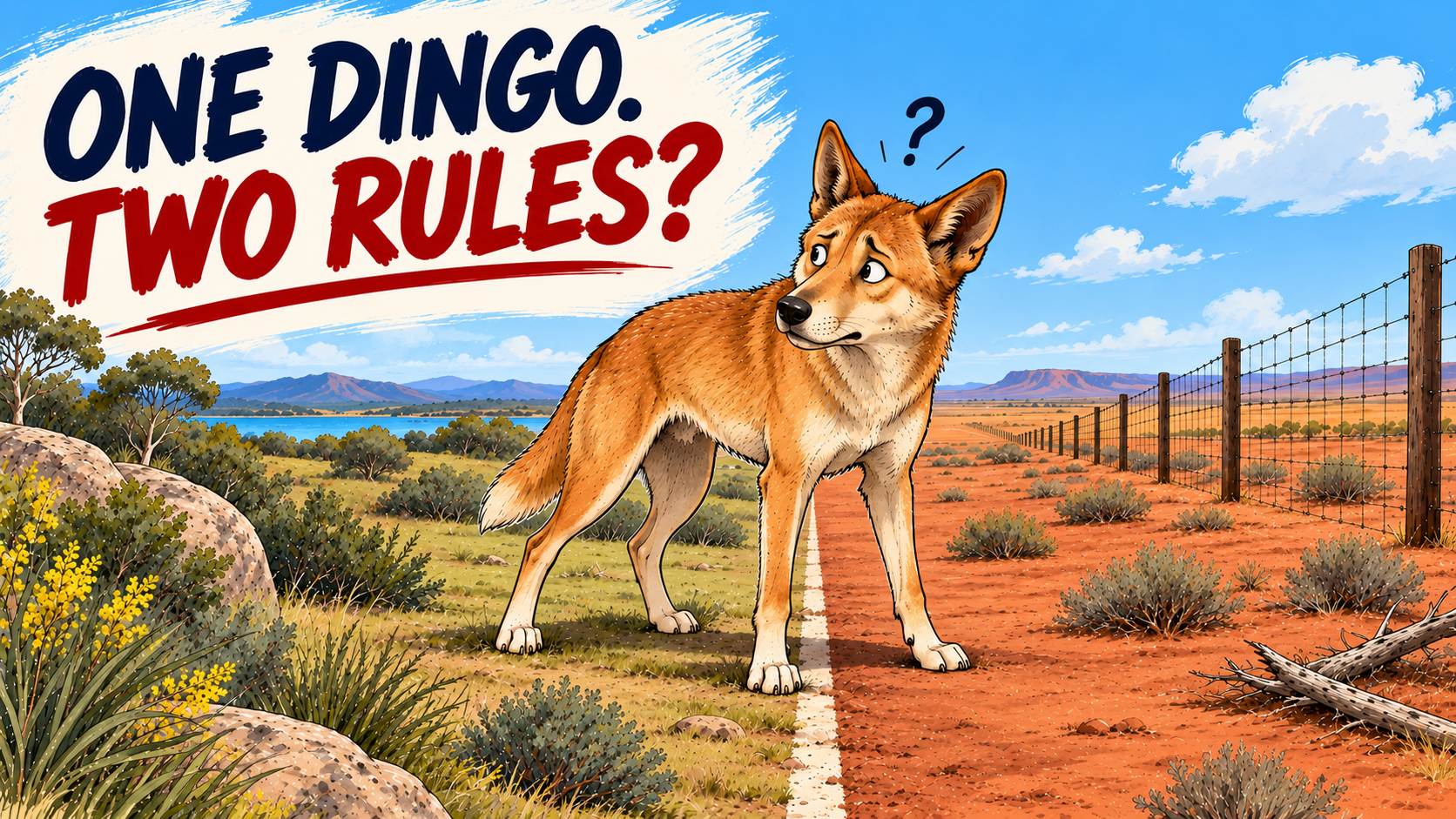
Why Is This Dingo Protected in Victoria but Controlled in South Australia?

Is Australia Really the Best Place to Survive the Apocalypse?